

 Salone Selection





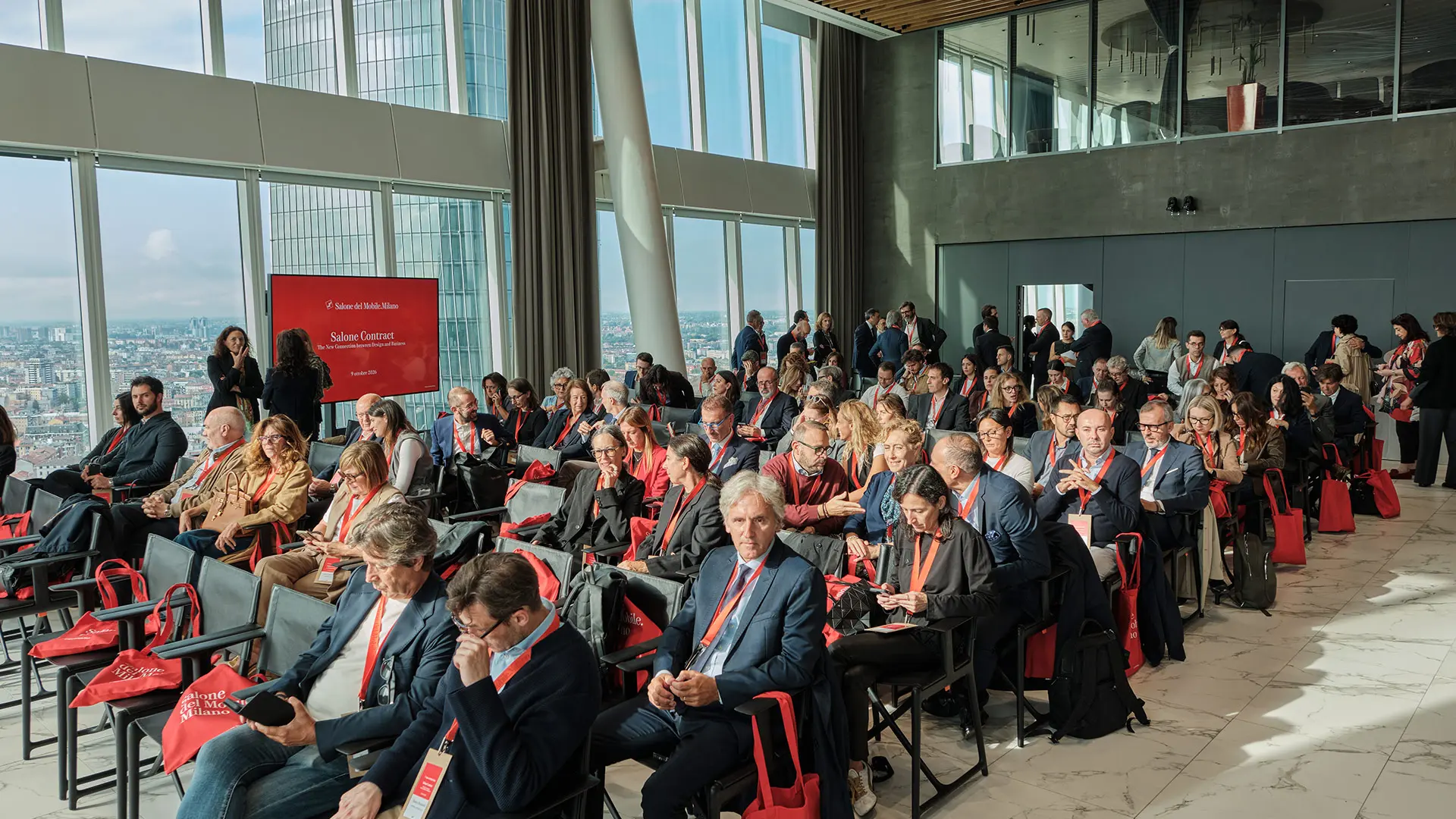
Report of the event on Friday 9 October, the first stage of the itinerary of discussion devoted to the debut of Salone Contract towards the 2027 edition
Parametric architecture: what it is, its origins and some examples of Parametricism
Text by
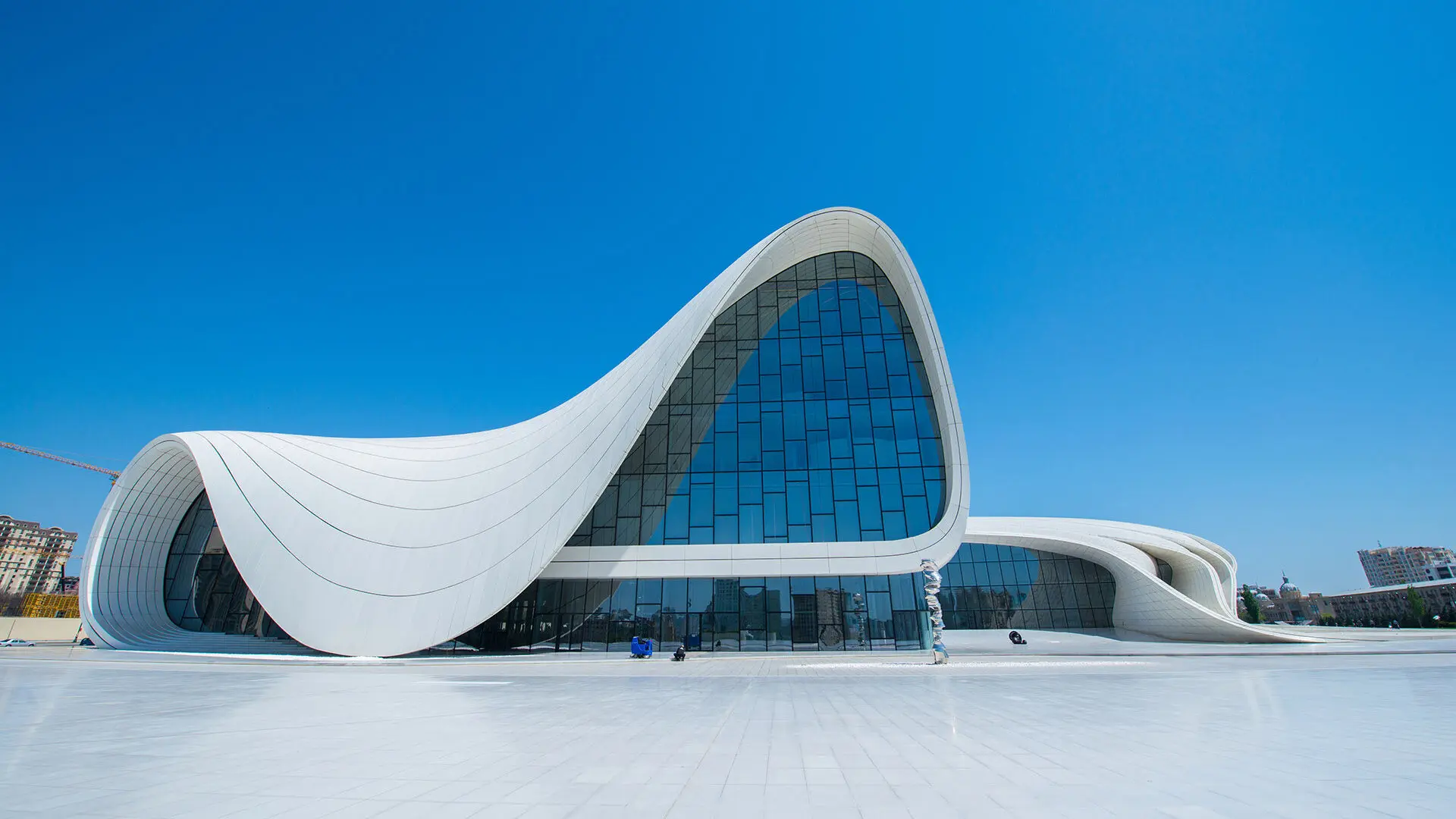
Heydar Aliyev Center, Baku, Azerbaigian, Zaha Hadid Architects
From Luigi Moretti at the 1960 Triennale to Patrik Schumacher’s manifesto and the works of Zaha Hadid: a history of architecture that entrusts form to algorithms, and which seeks to evolve from a method into a style
Algorithms, parameters, continuous curves, surfaces that twist and fold: the term “parametric architecture” encompasses buildings whose form is not drawn by hand, line by line, but is generated by a system of rules. The architect can precisely control a multitude of parameters - the orientation of the sun and wind, pedestrian flows and functional requirements, structural loads and the behaviour of materials. The software identifies the most efficient geometry to meet all requirements. Changing just a single value then suffices for the entire building to reconfigure itself. It is not, therefore, a matter of style, but of a parametric design method. Then there are those who argue the opposite, and much of its history revolves around this ambiguity.
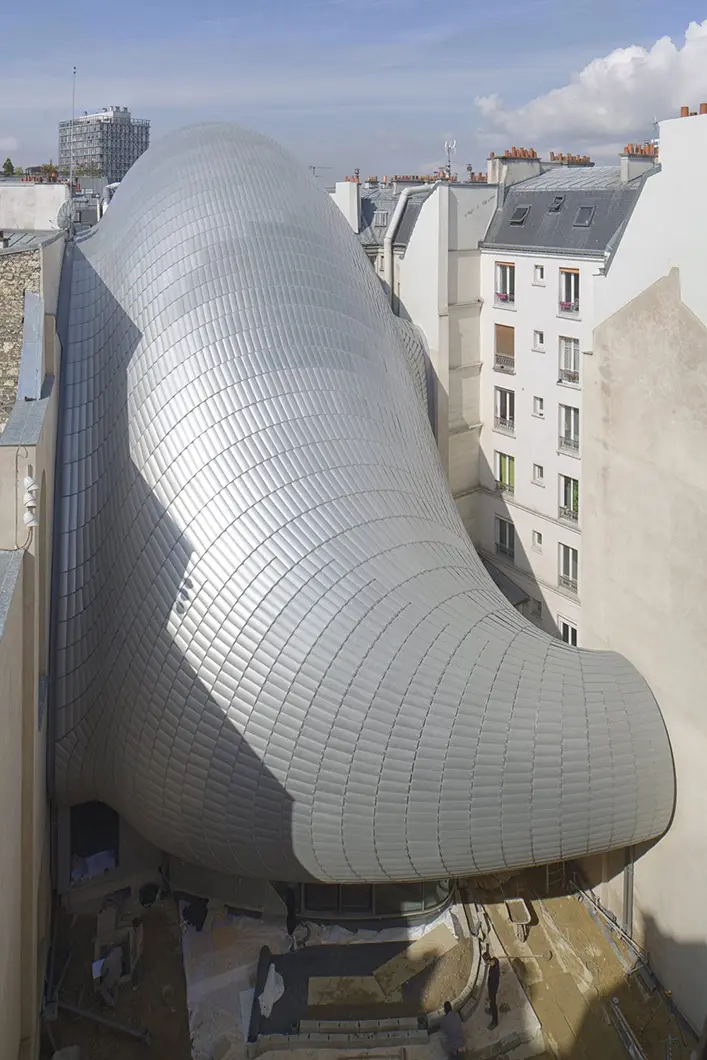
Renzo Piano Building Workshop, sede della Fondation Jérôme Seydoux-Pathé, Parigi, 2014 - Ph. Michel Denancé
The origins of parametric architecture: from Gaudí to Luigi Moretti
The idea of entrusting form to calculation predates computers by a long way. In the late nineteenth century, Antoni Gaudí studied the crypt of the Church of Colonia Güell using models of ropes and bags of pellets suspended upside down: the catenaries themselves determined the most efficient shape to bear the loads, and all the architect had to do was to turn them the right way up. Gaudí did not design the form: he let gravity determine it. In the 20th century, the same logic guided the shells, vaults and tensile structures of Félix Candela, Pier Luigi Nervi and Frei Otto - designers for whom form was generated first and foremost by numbers.
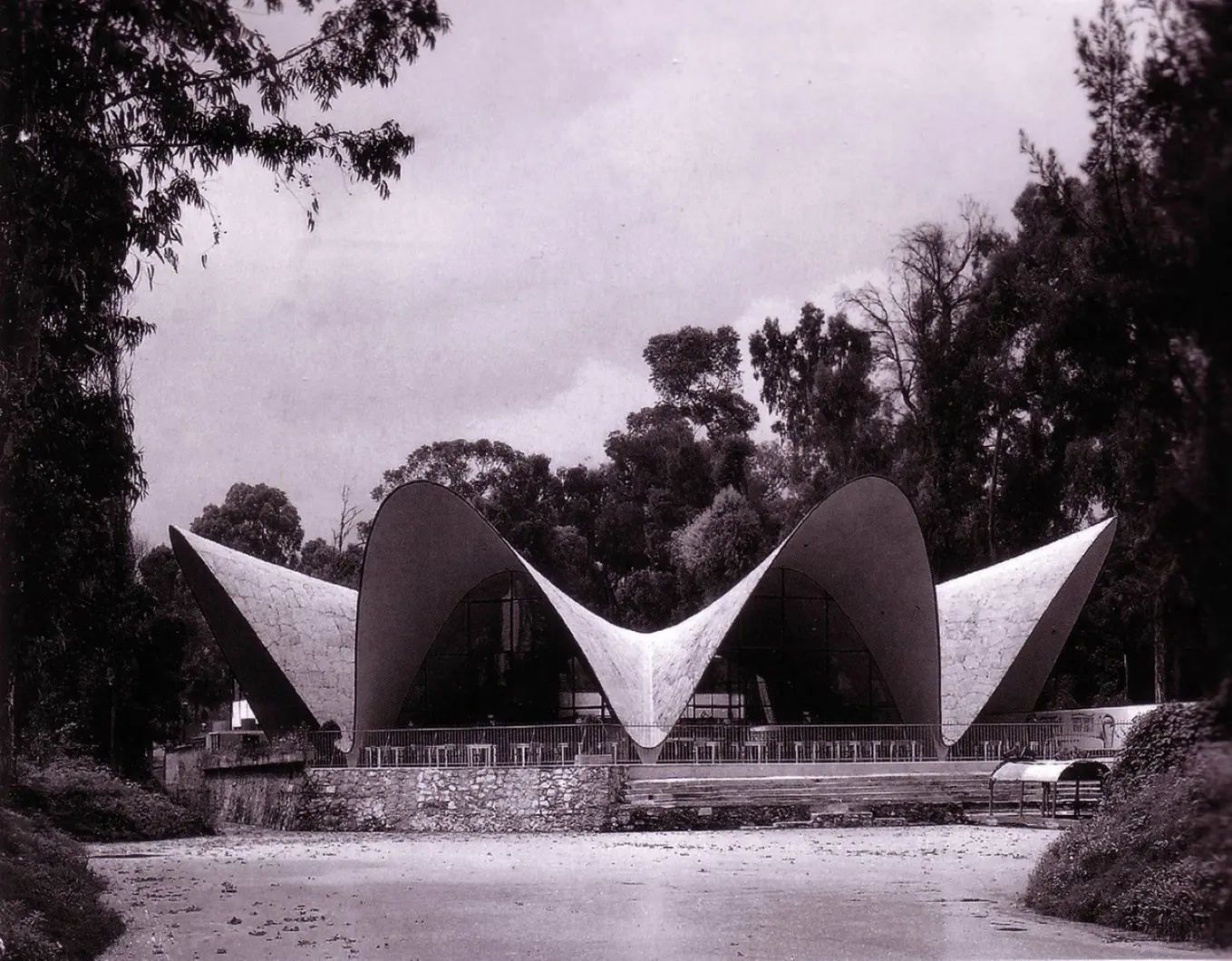
Félix Candela, ristorante Los Manantiales, Xochimilco, Città del Messico, 1958
The term, however, originated in Italy. In the 1940s, the Roman architect Luigi Moretti was the first to speak of parametric architecture, and in 1957, together with the mathematician Bruno de Finetti, he set up the IRMOU research institute for mathematics applied to urban planning. At the XII Milan Triennale in 1960, the group exhibiteddiagrams and plaster models of a football stadium whose shape was derived from some twenty different parameters, ranging from the visibility of the pitch from every seat to the cost of the tickets. For Moretti, architecture was not about the relationship between form and function, but about the process that led to their definition. Half a century before the advent of software, the initial insight was already there.
Leggi anche: Architettura parassita: occupare gli interstizi della metropoli
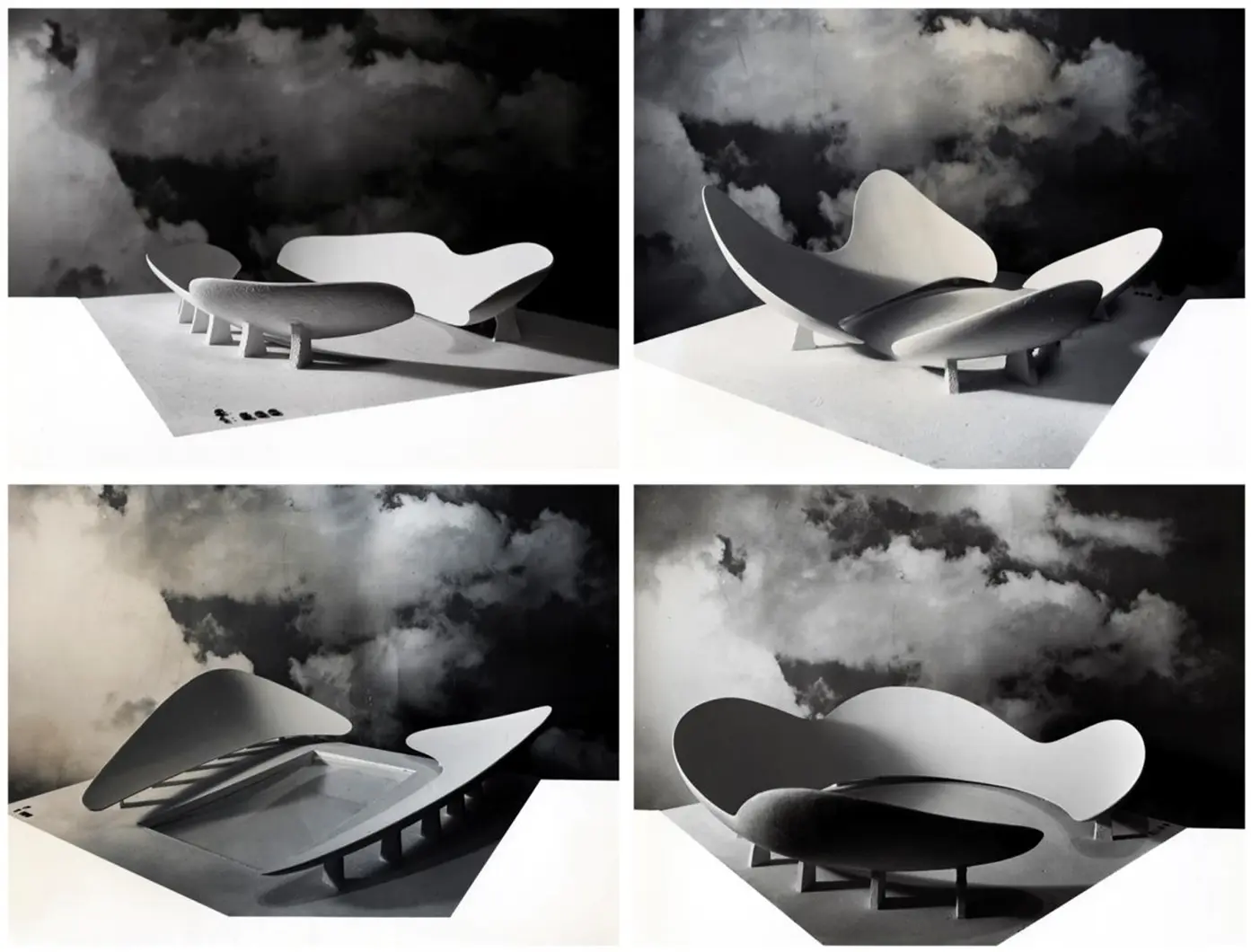
Luigi Moretti e IRMOU, modelli degli stadi di calcio M e N, dello stadio del nuoto, dello stadio del tennis e di un cinema.
Patrik Schumacher’s Parametricism Manifesto
For a long time, that insight remained a curiosity reserved for specialists. It only became standard practice with the spread of digital modelling, and only became a theory in 2008. During the Venice Architecture Biennale, Patrik Schumacher - who had been working alongside Zaha Hadid since 1988 and now heads up his own practice - presented the Parametricism Manifesto. Schumacher did not propose a method, he proclaimed an era: “Parametricism is the great new style after modernism. Postmodernism and Deconstructivism have been transitional episodes that ushered in this new, long wave of research and innovation,” he wrote.
Like any self-respecting manifesto, this one too lays down prohibitions and commandments. Familiar typologies, Platonic forms, straight lines, right angles and simple repetitionwere to be avoided. Hybridisation, deformation, transforming forms into one another- “programming rather than modelling” – were to be pursued. The result is architecture without sharp edges, which, according to Schumacher, must reflect the “liquid” complexity of contemporary society at every scale, from the city down to a piece of furniture.
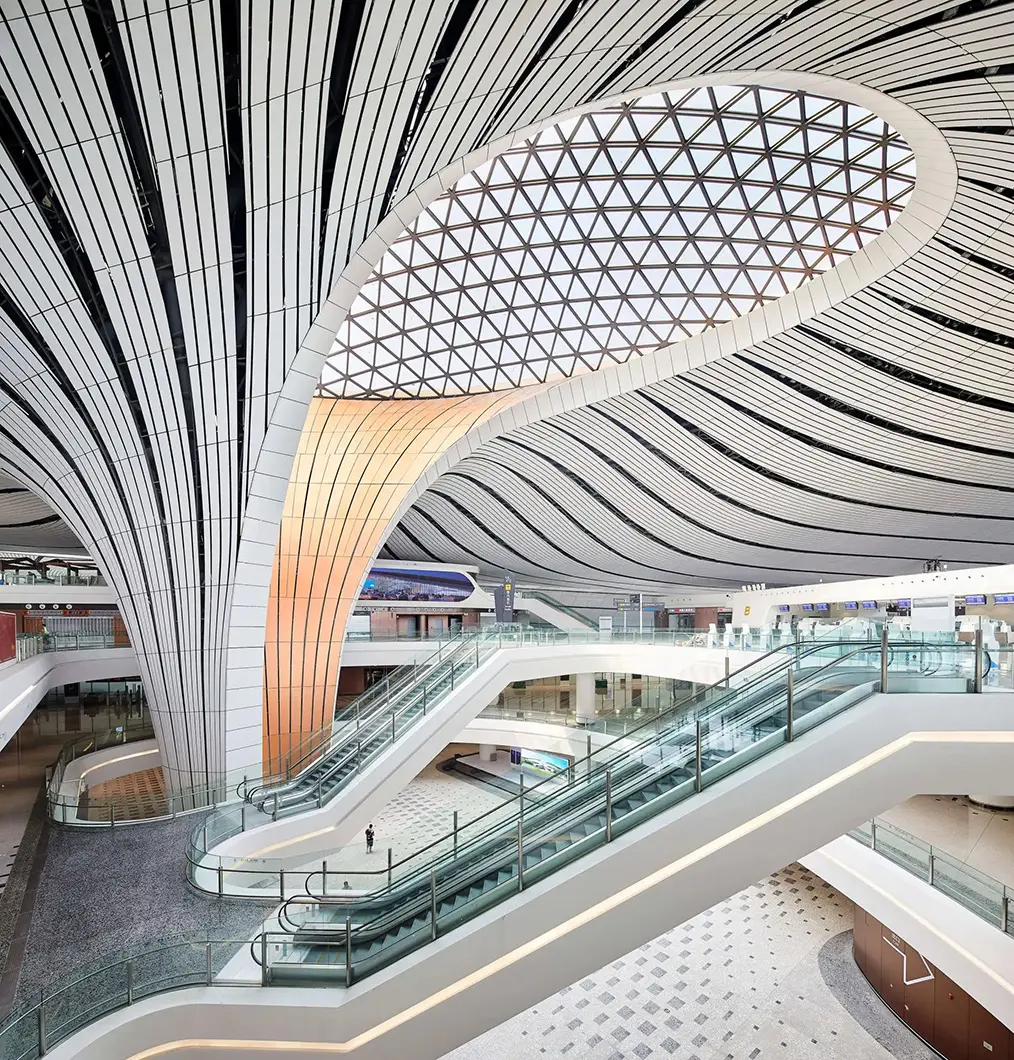
Zaha Hadid Architects, aeroporto internazionale di Pechino-Daxing, 2019 - Ph. Hufton+Crow
Zaha Hadid and the most famous examples of parametric architecture
If Schumacher was the theorist, Zaha Hadid (1950–2016) was the face of Parametricism. Having made her name in 1988 with the Deconstructivist Architecture exhibition at MoMA in New York, the Anglo-Iraqi architect gradually eschewed the sharp edges of her early work in favour of increasingly continuous surfaces, in which walls, roofs and floors merged into a single fluid form. Her signature work was the Heydar Aliyev Centre in Baku (2012): a white wave rising from the ground that never breaks.
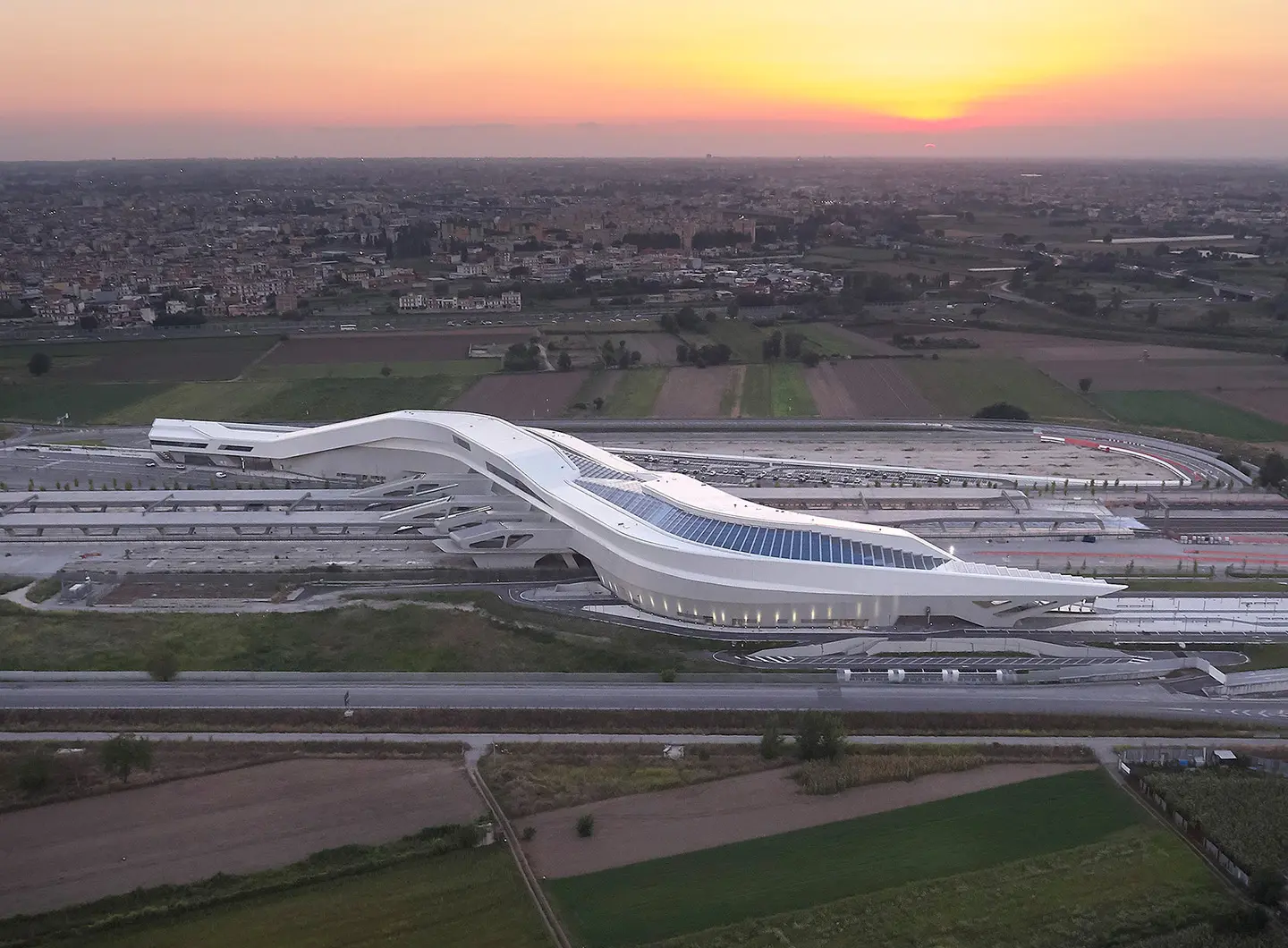
Parametricism also made its way to Italy, and even spawned a nickname in Milan. The Generali Tower in CityLife twists round its own axis floor by floor: to the people of Milan, it is simply known as “lo Storto” (the Crooked One). Further south, Naples Afragola station (2017) spans the high-speed railway tracks like an inhabited bridge.